
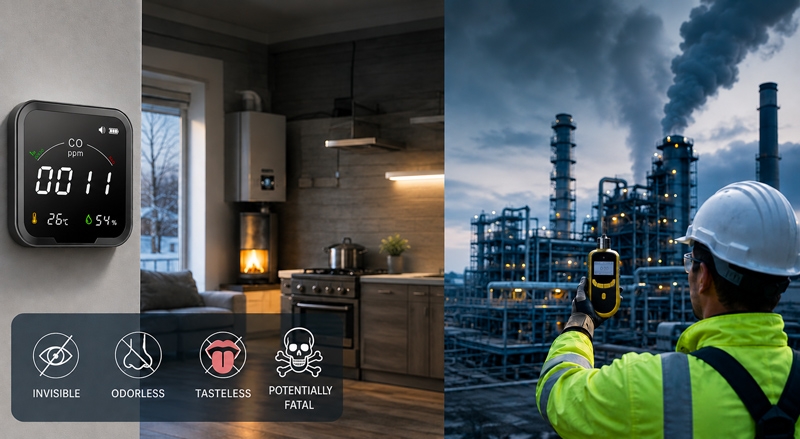
Carbon Monoxide (CO) is one of the most dangerous gases encountered in both residential and industrial environments. Unlike many hazardous substances, Carbon Monoxide is invisible, odorless, and tasteless, and can be detected only with specialized equipment. Because of these characteristics, it is often referred to as the "silent killer."
Every year, Carbon Monoxide exposure causes thousands of emergency incidents worldwide. Whether it originates from malfunctioning household appliances or industrial combustion processes, understanding Carbon Monoxide is the first step toward preventing serious health risks and fatalities.
What Exactly Is Carbon Monoxide?
Carbon Monoxide is a toxic gas produced when carbon-containing fuels burn incompletely. Common fuels that generate Carbon Monoxide include:
- Natural gas
- Propane
- Gasoline
- Diesel fuel
- Coal
- Wood
- Charcoal
Under ideal combustion conditions, these fuels produce Carbon Dioxide (CO2). However, when oxygen supply is insufficient or combustion equipment operates improperly, Carbon Monoxide is formed instead.
The danger lies in how CO interacts with the human body. Once inhaled, Carbon Monoxide binds to hemoglobin in the bloodstream more than 200 times more readily than oxygen. As a result, the body's organs and tissues receive less oxygen, potentially leading to serious health complications or death.
Why Is Carbon Monoxide So Dangerous?
One of the biggest challenges with Carbon Monoxide is that people often don't realize they are being exposed until symptoms become severe.
Early symptoms may resemble common illnesses:
- Headaches
- Dizziness
- Fatigue
- Nausea
- Shortness of breath
As exposure levels increase, symptoms can progress to:
- Confusion
- Loss of coordination
- Unconsciousness
- Permanent neurological damage
- Death
Because CO cannot be seen or smelled, relying on human senses is never sufficient. Detection technology is the only reliable method for identifying dangerous concentrations before they become life-threatening.
Common Sources of Carbon Monoxide in Homes
Many homeowners associate Carbon Monoxide risks exclusively with winter heating systems, but exposure can occur year-round. Typical residential sources include gas furnaces, water heaters, fireplaces, gas stoves, portable generators, and attached garages where vehicles may idle. Poor ventilation, blocked flues, or equipment malfunctions can allow CO to accumulate indoors.
A common misconception is that natural gas detectors and Carbon Monoxide alarms perform the same function. In reality, they monitor different hazards. Natural gas detectors identify unburned fuel leaks, while Carbon Monoxide alarms detect toxic combustion byproducts. Both serve important safety roles but address separate risks.
For homeowners seeking continuous protection, installing a dedicated Carbon Monoxide alarm is one of the most effective safety measures available. Modern devices such as the GasDog home CO alarm provide continuous monitoring, audible alerts, and advanced sensor technology designed to warn occupants before dangerous exposure levels occur. You can learn more about reliable residential protection options through our home gas alarm collection.
Carbon Monoxide Risks in Industrial Environments
While residential incidents receive significant public attention, industrial settings often face even greater Carbon Monoxide risks. Factories, manufacturing facilities, warehouses, power plants, mining operations, and confined spaces frequently involve combustion equipment that can generate CO.
Industries commonly exposed to Carbon Monoxide include:
- Oil and gas operations
- Steel manufacturing
- Chemical processing
- Wastewater treatment facilities
- Power generation plants
- Logistics and warehousing using fuel-powered vehicles
In these environments, elevated Carbon Monoxide concentrations may develop rapidly, especially in enclosed or poorly ventilated areas. Workers performing maintenance activities inside tanks, tunnels, pipelines, or confined spaces face particularly high risks because dangerous gas accumulations may not be immediately apparent. Continuous monitoring is therefore essential for regulatory compliance and personnel safety.
How Industrial CO Gas Detectors Prevent Accidents
Industrial safety programs increasingly rely on fixed and portable gas detection systems to identify hazards before they escalate. Unlike residential alarms, GasDog industrial gas detectors are designed for demanding environments and often include features such as:
- Real-time concentration monitoring
- Audible, visual, and vibration alarms
- Data logging capabilities
- Remote communication outputs
- Integration with facility safety systems
- Continuous 24/7 monitoring
Portable gas detectors play a critical role in protecting workers during inspections, maintenance, and other field operations, while fixed monitoring systems ensure continuous area surveillance for long-term safety. For facilities that require dependable CO monitoring solutions, GasDog offers a full range of industrial gas detector solutions designed for demanding environments.
The GD200-CO, GD300-CO, and GD700-CO Carbon Monoxide detectors provide flexible options for different application needs—from portable on-site detection to advanced fixed installation systems. Each model is engineered to deliver fast response, accurate readings, and reliable early warning performance in industrial settings.
By integrating these GasDog CO detectors into safety protocols, facilities can significantly reduce the risk of exposure incidents, minimize operational downtime, and prevent costly emergencies through timely detection and response.
Signs That You May Have a Carbon Monoxide Problem
Carbon Monoxide incidents often develop gradually, making them difficult to recognize. You should investigate immediately if:
- Multiple occupants experience headaches or dizziness simultaneously.
- Symptoms improve when leaving the building and return upon re-entry.
- Gas appliances show signs of malfunction.
- Pilot lights frequently extinguish.
- Soot accumulates around combustion equipment.
- Ventilation systems appear blocked or damaged.
In industrial facilities, unexpected worker complaints, alarm activations, or unusual combustion equipment performance may indicate elevated CO levels requiring immediate attention.
Prevention Is Always Better Than Response
The most effective Carbon Monoxide safety strategy combines prevention, monitoring, and routine maintenance. For homeowners, annual inspection of fuel-burning appliances and proper installation of Carbon Monoxide alarms can significantly reduce risk. For industrial operators, preventive maintenance programs should be supported by calibrated gas detection equipment capable of continuously monitoring workplace conditions. Organizations that invest in proactive detection typically experience fewer safety incidents, lower compliance risks, and improved operational reliability.
Choosing the Right Carbon Monoxide Detection Solution
The ideal solution depends on the environment being protected. For residential applications, a certified Carbon Monoxide alarm provides essential protection against household CO hazards. For commercial and industrial facilities, portable or fixed gas detectors should be selected based on factors such as:
- Detection range
- Environmental conditions
- Installation requirements
- Communication protocols
- Regulatory compliance standards
Working with an experienced gas detection provider helps ensure that monitoring systems are properly matched to the specific risks present in each environment.
Conclusion
Carbon Monoxide remains one of the most underestimated safety hazards because it gives no warning signs that humans can naturally detect. Whether in a family home or a large industrial facility, exposure can escalate quickly and have devastating consequences.
Understanding what Carbon Monoxide is, where it comes from, and how to detect it effectively can save lives. The good news is that modern detection technology makes prevention easier than ever. From residential CO alarms to advanced industrial monitoring systems, investing in reliable gas detection is a practical step toward creating safer environments for everyone.


