
Related Gas Detector
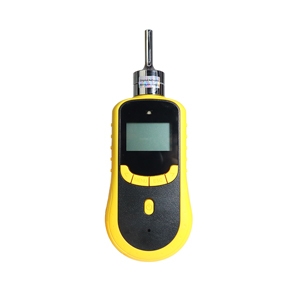
| Model | GD200-Cl2 |
| Gas | Chlorine (Cl2) |
| Range | 0 to 5 ppm, 0 to 10 ppm, 0 to 20 ppm, 0 to 50 ppm, 0 to 100 ppm or 0 to 200 ppm |
| Resolution | 0.001ppm, 0.01ppm or 0.1ppm |
| Accuracy | ≤±3% F.S. |
| Explosion-proof Grade | II 2G Ex ia IIC T4 Ga |
| Certification | CE, ATEX |
Case Study: Portable Chlorine (Cl2) Gas Detector for a Specialty Gas Manufacturer
A specialty gas manufacturer in Los Angeles provides electronic specialty gases for high-tech industries, including semiconductor and solar manufacturing. As Chlorine (Cl2) was used in its production process, the company needed a reliable way to monitor potential Chlorine leaks in its cylinder storage area and production workshop.
Challenge
The customer stored Chlorine in dedicated gas cylinders and needed a portable Chlorine gas detector for two main purposes:
- Checking for Chlorine before workers entered the cylinder storage area
- Monitoring Chlorine concentrations during daily production
If a leak occurred, workers needed to detect the abnormal concentration quickly, take appropriate ventilation measures, and investigate the potential leak source.
Solution
The customer initially considered the GasDog GD500 diffusion-type gas detector. After discussing the actual application, GasDog recommended the GD200 pumped gas detector instead.
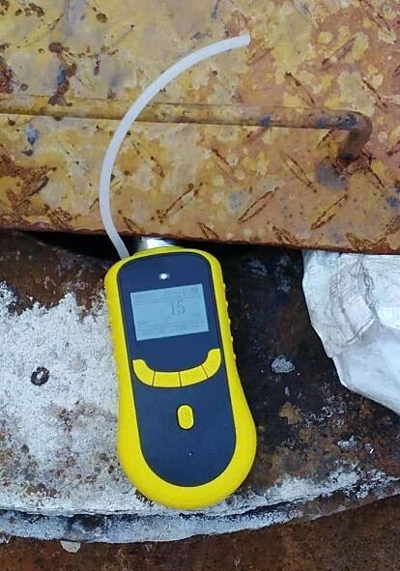
For this application, pumped sampling offered greater flexibility because the gas detector could actively draw air through a sampling line from a selected location. This made it more suitable for pre-entry checks and investigating suspected Chlorine leak areas without requiring workers to immediately approach the potential source. The customer ultimately selected the GD200-Cl2 for portable Chlorine gas monitoring.
Result
The GD200-Cl2 provided the customer with a practical solution for:
- Pre-entry Chlorine checks
- Routine workplace monitoring
- Sampling at selected locations
- Supporting Chlorine leak investigations
The successful experience with Chlorine detection also led to further purchases for other gases, including nitrogen (N2), ammonia (NH3), and argon (Ar).
This ongoing cooperation reflects the importance of selecting a gas detector based not only on the gas being monitored, but also on the application, sampling method, and working environment.
Key Takeaway
For toxic gas applications such as Chlorine, choosing the right sampling method can be just as important as choosing the right sensor. A diffusion detector may be suitable for some personal monitoring applications, while a pumped Chlorine gas detector can provide greater flexibility when workers need to sample specific locations or investigate suspected leaks.
Looking for a Chlorine gas detection solution? Contact GasDog to discuss your application and find the right portable or fixed gas detection solution.


