
WiFi gas leak detectors are a core component of modern home safety systems. Designed for households that use natural gas, LPG, and Carbon Monoxide, as well as Carbon Dioxide and smoke detection, these devices enable remote monitoring and real-time alerts via wireless connectivity. They overcome the limitations of traditional detectors, which only provide on-site alarms, and deliver continuous 24/7 protection for the home.
With high-precision sensing and intelligent functionality, these devices are becoming a preferred solution for improving overall household safety. GasDog home gas detectors accurately detect harmful gases such as natural gas, liquefied petroleum gas, and CO, perfectly combining reliable sensing, intelligent alarms, and comprehensive home protection features.
Why WiFi Gas Detectors Are Becoming Essential for Home
Gas safety is a critical concern in any home. Leaks of natural gas or LPG can lead to explosions or poisoning, while CO gas—often referred to as a silent killer—is particularly dangerous because it is colorless and odorless. In addition, elevated carbon dioxide levels or the presence of smoke may indicate ventilation issues or fire risks within the home.
Traditional gas leak detectors are usually limited to single gas detection and rely entirely on local alarms. This means that if no one is present, a dangerous situation may go unnoticed. In contrast, WiFi gas leak detectors integrate real-time monitoring, remote alerts, and intelligent features into one system, enabling multi-gas detection and shifting protection from passive to proactive.
Key benefits:
- Multi-gas Detection: detects natural gas, LPG, Carbon Monoxide, Carbon Dioxide, and smoke
- Remote Monitoring: check gas levels anytime through a mobile app
- Smart Alarm: Automatic alarm triggered when thresholds are exceeded
- Dual Protection: local alarm plus remote notifications
- Long Battery life: some models last up to 10 years
Selecting the right solution for your home depends on factors such as the types of gases you need to monitor, installation preferences, and the level of smart functionality required. For a deeper understanding of how to choose the most suitable option, you can refer to this Home Gas Monitor Alarms buying guide, which covers key features, selection tips, and practical considerations for home use.
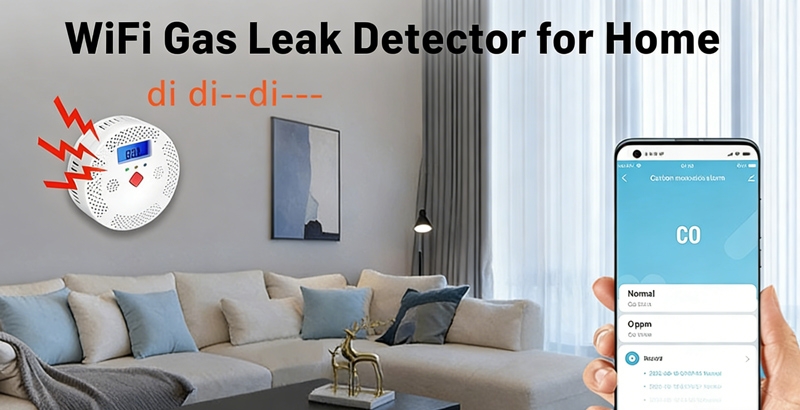
Remote Alerts: Continuous Protection Beyond the Home
One of the most important benefits is the ability to receive instant alerts for gas abnormalities, regardless of location. With 2.4GHz WiFi connectivity, the detector synchronizes data with a mobile app in real time. Once gas levels exceed the preset threshold, the system immediately triggers alerts.
WiFi-enabled gas detectors are equipped with high-precision sensors that respond within milliseconds. When thresholds are exceeded, alerts are sent to the app, while higher-risk situations activate both a loud on-site alarm (around 85dB) and remote emergency notifications.
This effectively addresses the limitation of traditional systems, where no one is home to hear the alarm, ensuring that risks are detected and acted upon in time.
Common use cases:
- Business Trips: monitor home conditions remotely and respond quickly
- Nighttime: dual alerts help ensure occupants are awakened in time
- Vacations: stay informed about potential gas issues while away
- Cooking: receive immediate alerts if gas is left on or abnormalities occur
Real-Time Monitoring: Full Visibility Into Home Gas Safety
Real-time monitoring allows users to move from reactive responses to proactive prevention. Through a mobile application, gas concentration levels and device status can be checked at any time.
Some models support simultaneous monitoring of multiple gases and provide historical data tracking, making it easier to identify trends and detect potential risks early within the home.
Monitoring features:
- Instant access to gas levels and device status
- Historical data for daily, weekly, or monthly trends
- Multi-parameter monitoring, including temperature on some models
- Alerts triggered by rising gas levels
A dual alert system combines both local and remote warnings to ensure that no critical alert is missed. On-site alarms typically reach 85–90dB and are paired with visual indicators such as flashing lights.
Additionally, some alarm models can send remote notifications via app alerts, SMS, or voice calls, ensuring users receive notifications even when their phones are on silent mode or temporarily unavailable.
Traditional vs. WiFi Gas Leak Detectors
|
Scenario |
Traditional Gas Detectors |
WiFi Gas Detectors |
|
No one is at home |
No awareness of risk |
Remote alerts enable timely response |
|
Sleeping |
The alarm may be ignored |
Dual alerts improve wake-up response |
|
Phone silent/off |
No remote notification |
Multi-channel alerts available |
|
Multiple gas risks |
Single detection |
Simultaneous multi-gas monitoring |
Easy Installation: Designed for Everyday Home Use
Despite their advanced features, WiFi gas detectors are designed to be simple and user-friendly. Installation typically requires no professional tools or technical knowledge.
Most GasDog models support plug-and-play or wall-mounted installation, making them suitable for different areas of the home such as kitchens and bedrooms. Setup is completed through a mobile app, often within just a few minutes.
Installation and maintenance benefits:
- No professional installation required
- Simple app-based setup with guided instructions
- Built-in self-diagnostic features
- Low maintenance with long battery life
Conclusion
WiFi gas leak detectors combine remote monitoring, real-time data, dual alert systems, and smart connectivity into a single solution for the home. By enabling early detection and faster response, they significantly improve household safety and reduce the risk of gas-related accidents.
With reliable multi-gas detection and easy operation, these devices are a practical choice for modern homes. Installing a GasDog WiFi gas leak detector is an effective step toward creating a safer and more secure living environment.


