
Hydrazine, with the chemical formula N2H4, is a colorless, highly reactive chemical compound composed of Nitrogen and Hydrogen. Classified as a toxic gas hazard due to its ability to generate hazardous vapors, Hydrazine is widely used in aerospace, chemical manufacturing, power generation, and industrial processes. Although Hydrazine is commonly stored and transported as a liquid, it can easily release toxic gas vapors into the surrounding environment, creating serious health and safety risks without proper detection and monitoring.
N2H4 has an Ammonia-like odor, but odor should never be considered a reliable warning method because dangerous concentrations may exist before people detect it. Hydrazine exposure can cause serious health risks, including respiratory damage, skin irritation, and long-term health effects. Therefore, accurate and reliable monitoring of Hydrazine gas is essential for industries that handle or store this hazardous chemical.
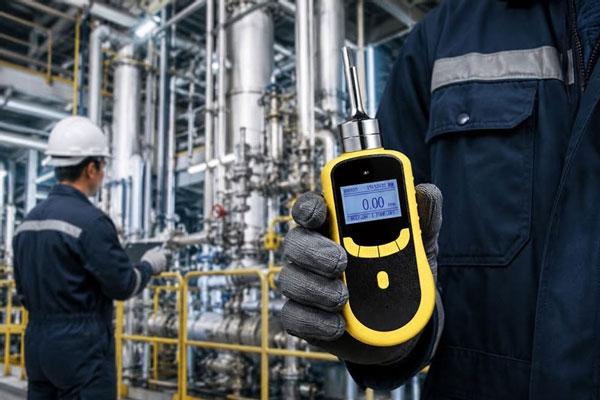
Physical and Chemical Properties of Hydrazine
Hydrazine reacts strongly with oxidizing agents and can create fire or explosion risks under certain conditions.
| Property | Description |
| Chemical Formula | N2H4 |
| Appearance | Colorless liquid |
| Molecular Weight | 32.05 g/mol |
| Odor | Ammonia-like smell |
| Boiling Point | 113.5°C |
| Flammability | Highly flammable |
| Solubility | Completely soluble in water |
| Toxicity | Highly toxic |
Common Applications of Hydrazine Gas
Hydrazine has unique chemical properties, including strong reducing ability and high reactivity, making it valuable in various industrial applications. It is widely used in industries that require precise chemical control and reliable performance, including aerospace, energy, chemical manufacturing, and research.
- Aerospace and Rocket Propulsion: Hydrazine is widely used as a rocket propellant because it can produce high-energy reactions and provide reliable propulsion for spacecraft, satellites, and aerospace systems.
- Power Plant Water Treatment: In some power generation facilities, Hydrazine is used as an Oxygen scavenger to reduce corrosion inside boilers and steam systems.
- Chemical Manufacturing: Hydrazine is an important chemical intermediate used in producing pharmaceutical compounds, agricultural chemicals, polymer additives, chemical blowing agents, and industrial research and laboratories.
Why is Hydrazine Dangerous?
Hydrazine is considered a highly toxic chemical because exposure can occur through inhalation, skin absorption, or direct contact.
Potential health effects include:
- Eye and skin irritation
- Coughing and breathing difficulties
- Headaches and dizziness
- Nausea and vomiting
- Nervous system damage
- Liver and kidney effects
- Increased cancer risk from long-term exposure
Because Hydrazine can be dangerous even at very low concentrations, continuous monitoring is necessary in workplaces where exposure is possible.
Portable N2H4 Gas Detector for Industrial Safety
For applications requiring mobile Hydrazine monitoring, GasDog portable N2H4 gas detector provides accurate and convenient detection for hazardous environments.
GasDog Hydrazine Gas Detector
Designed as a handheld single-gas monitor, this industrial gas detector uses a precision Hydrazine sensor and supports a measuring range of 0 to 1 ppm, with a resolution of 0.001 ppm, helping workers identify low-level Hydrazine exposure risks. Features include:
- High sensitivity detection
- Fast response time
- Audible, visual, and vibration alarms
- Portable design for field inspections
- Explosion-proof certification for hazardous areas
- Data recording capability
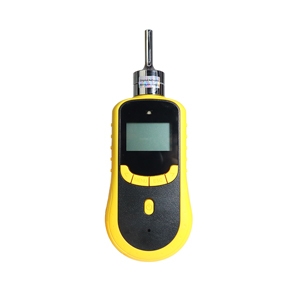
| Model | GD200-N2H4 |
|
Gas |
Hydrazine (N2H4) |
| Range | 0 to 1ppm |
| Resolution | 0.001ppm |
| Accuracy | ≤±3% F.S. |
| Explosion-proof Grade | Ⅱ 2G Ex ia Ⅱ CT4 Ga |
| Certification | CE, ATEX |
Applications of Hydrazine Gas Detection
A reliable Hydrazine detection system provides an additional layer of protection by identifying leaks before they develop into serious hazards. Portable Hydrazine detectors are widely used in aerospace facilities to monitor propellant handling and maintenance areas, chemical plants to detect accidental releases during production and storage, power generation facilities where Hydrazine-based water treatment chemicals are applied, and laboratories that require safety monitoring during chemical experiments and research activities.
Conclusion
Hydrazine N2H4 is an important chemical used in aerospace, energy, and industrial manufacturing. However, its high toxicity and flammability make effective safety monitoring essential. Using a professional Hydrazine gas detector allows workers to monitor hazardous environments, detect leaks quickly, and reduce exposure risks. For industries requiring accurate and portable N2H4 monitoring, GasDog provides a reliable solution for toxic gas detection and workplace safety.


